
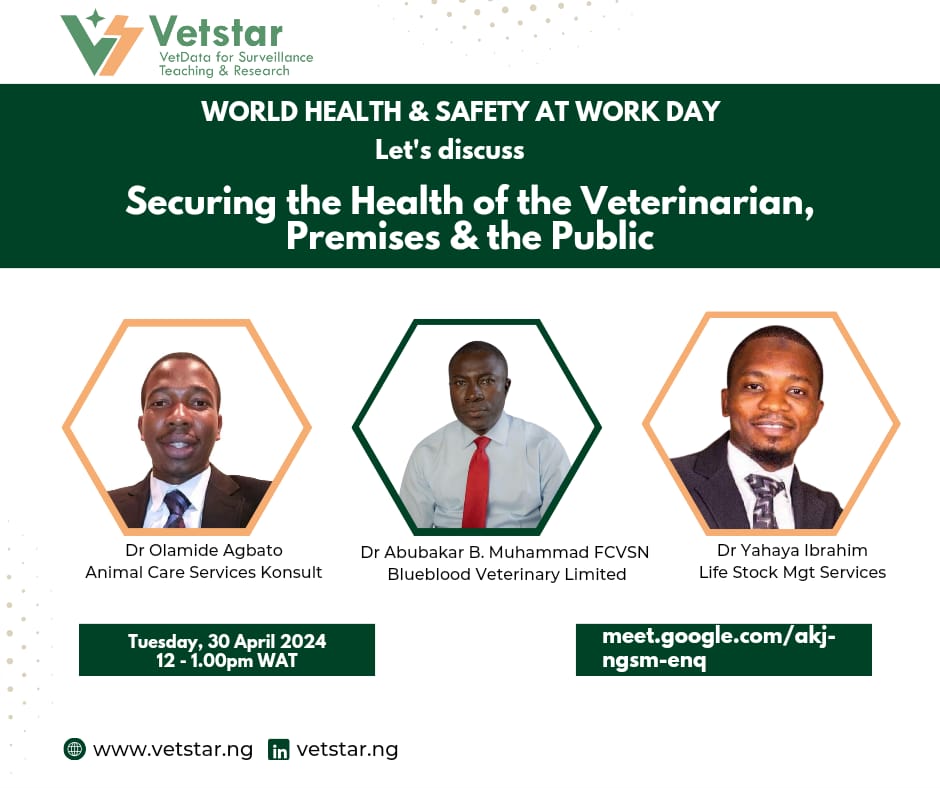
Veterinary experts have called on veterinarians across the country to support improvement in surveillance and reporting of diseases in Nigeria to safeguard human lives as well as animals’ lives. They made the call at a panel session organised by Vetstar, a veterinary public health education consultancy, to commemorate World Health & Safety Day and World Veterinary Day on April 30, 2024. The experts highlighted the need for improved safety protocols, better waste management, and enhanced communication and education in veterinary practices across the country.
Speaking on considerations for health and safety in setting up veterinary premises, Dr. Bala Muhammed, the CEO of Blueblood Veterinary Limited emphasised the importance of designing clinics with safety in mind. In his words “the design of the clinic should favour cleaning and disinfecting of surfaces. We must prioritise the use of stainless-steel examination surfaces and provide appropriate personal protective equipment (PPE) for veterinarians.” He also encouraged veterinarians to take proper waste management seriously; explaining the need to segregate hazardous and non-hazardous waste materials as a way to limit zoonotic disease transmission and facilitate recycling.
Dr. Olamide Agbato, the National Diagnostic Laboratory Lead at Animal Care Services Konsult stressed the importance of biosecurity measures in livestock farms saying “livestock farms should be cited far away from residential areas and incorporating biosecurity measures to prevent the spread of diseases”.
Dr Ibrahim Yahaya, a Clinician and Veterinary Surgeon at LifeStock Management Services Limited highlighted the need for adequate restraint of animals and proper hand hygiene to prevent harm to patients and staff. He said “alcohol-based sanitizers, wipes and disposable gloves should be part of every ambulatory kit”.
Dr Olamide Agbato, speaking further on outbreak monitoring and reporting, emphasised the importance of diligent record keeping and communication among veterinarians and with the public about changing disease trends and patterns. “We veterinarians must educate our clients and the public on the risks and consequences of zoonotic diseases.” He said.
The session ended with a call to action from Dr Bala Muhammad, urging veterinary authorities to work together with private practices to address the gaps in disease surveillance, reporting, and communication, and to prioritise the safety and health of all stakeholders.
“Vetstar will continue to provide a platform for veterinarians to engage and reflect on ways to practise safely and improve the standing of the profession in Nigeria,” said Dr. Zaharat Kadri-Alabi, programme manager of Vetstar and moderator of the session. By emphasising the critical importance of disease surveillance and safety in veterinary practices, Vetstar aims to inspire action and protect the lives of humans and animals across Nigeria.